From Awareness to Action: Uttarakhand’s Emerging Organ Donation Ecosystem
Pallavi Kumar, Sanchit Arora
Indian Transplant Newsletter. 2026 Jan-Mar; 25(1): p.8-9
DOI: https://doi.org/10.64384/ITN.2026.012
Print ISSN 0972 - 1568
Online ISSN 3048 - 653X
Download PDF
A one-day workshop titled “Strengthening Organ Donation and Transplantation Processes in Uttarakhand” organised by SOTTO Uttarakhand in collaboration with MOHAN Foundation at Government Doon Medical College, Dehradun, bringing together key healthcare stakeholders across the state. The workshop focused on enhancing clinical knowledge, regulatory clarity, and inter-institutional coordination through scientific sessions, panel discussions, and interactive deliberations, engaging around 80 delegates and reinforcing a collaborative approach to strengthening deceased organ donation systems in Uttarakhand.
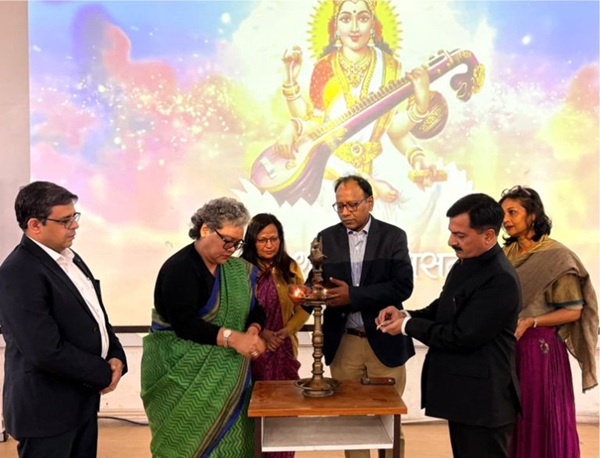
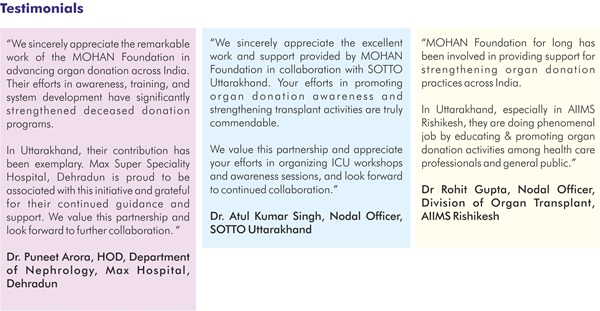
Building on its sustained collaboration with MOHAN Foundation, Uttarakhand is steadily transitioning from awareness to action in organ donation. What began as a series of advocacy efforts has, over time, evolved into a more structured and responsive ecosystem—one that is increasingly capable of translating intent into impact.
Across the state, the focus has shifted from simply informing communities to actively engaging them, while simultaneously strengthening the preparedness of healthcare systems. Grassroots initiatives such as Nukkad Nataks have taken the message of organ donation into towns and neighbourhoods, breaking myths and opening up conversations that were once difficult to initiate.
At the same time, capacity-building workshops for ICU teams at Doon Medical College have worked to ensure that when critical moments arise, hospitals are equipped not just with knowledge, but with the confidence and systems required to act. These parallel efforts — community awareness and clinical readiness — are now beginning to converge.
The result is visible in tangible outcomes, including the state's second multi-organ deceased donation in January 2026. Together, these developments signal something more than progress; they point to the emergence of an ecosystem where informed communities and prepared institutions are beginning to work in tandem. And, it is within this evolving landscape that a recent case brought into sharp focus what this transition truly means.
It began with an accident—a fall that changed everything. Mr. Raghu Paswan, a 42-year-old daily wage worker and sole breadwinner, was brought to AIIMS Rishikesh with a severe traumatic brain injury. Despite every effort, his condition deteriorated, and he was declared brain-dead following due protocols. What could have ended there became something far more profound. In the midst of unimaginable grief, his family made the courageous decision to consent to organ donation. In that moment, the focus shifted—from loss to possibility, and from clinical care to the readiness of a system to respond.
What followed was a coordinated, time-critical effort involving doctors, transplant coordinators, ICU teams, forensic authorities, and police officials. Approvals were secured, donor maintenance initiated, and allocation systems activated as transplant teams mobilized across cities. Organs were retrieved and transported through green corridors: the heart to Army Hospital (Research and Referral), one kidney to AIIMS New Delhi, and the liver, second kidney, and pancreas to PGIMER Chandigarh, while the corneas were retained at AIIMS Rishikesh. In that moment, distance gave way to urgency and purpose. A family had said yes, a system had responded, and lives across the country were transformed.
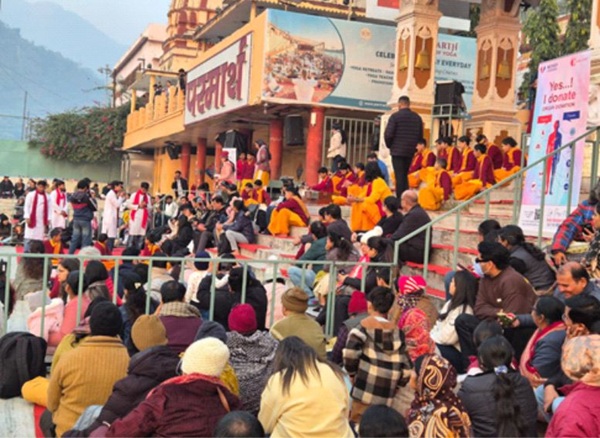 Public at Parmarth Niketan Ghat, Rishikesh watching the Nukkad-Natak
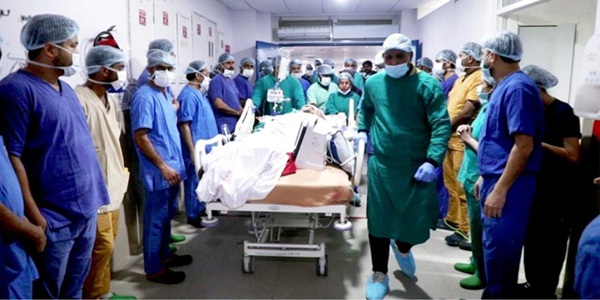 Walk of Honour held in tribute to Shri Raghu Paswan Ji
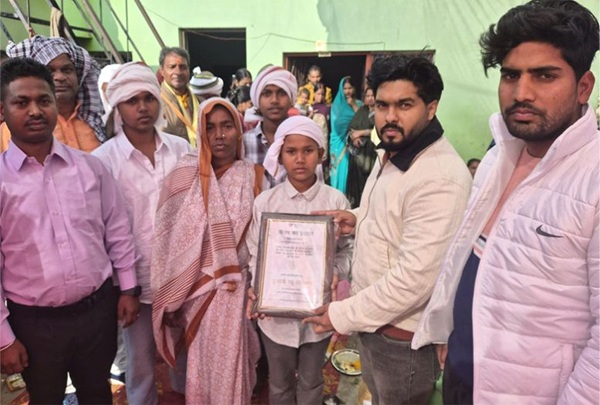 Mr. Sanchit Arora felicitating the family of Shri Raghu Paswan on February 03, 2026
To cite
: Kumar P, Arora S. From Awareness to Action: Uttarakhand’s Emerging Organ Donation Ecosystem. Indian Transplant Newsletter. 2026 Jan-Mar; 25(1): p.8-9.
DOI: 10.64384/ITN.2026.012
Available at:
https://www.itnnews.co.in/indian-transplant-newsletter/issue79/From-Awareness-to-Action-Uttarakhands-Emerging-Organ-Donation-Ecosystem-1451.htm
Available at:
https://www.itnnews.co.in/indian-transplant-newsletter/issue79/From-Awareness-to-Action-Uttarakhands-Emerging-Organ-Donation-Ecosystem-1451.htm
- Copyright © 2026. Published by MOHAN Foundation
